Does the strength of a country lie in the power of its myths?
Thursday, March 14, 2013


Thursday, November 15, 2012
Virginia MacKenny - Waymarker
Vitrginia MacKenny’s exhibition 'Waymarker’ on at David Krut in Cape Town at the moment, marks a philosophical enquiry into being and survival in times of crisis, and her deepening concerns about our disconnect from the natural world. It marks a personal journey and a ‘meditation on the move’ against a global backdrop of unease and uncertainty.
The darkly saturated pthalo oil paintings are echoed by their bleached-out counterparts and a natural chronology leads to the small watercolours: the large paintings on the outer walls were made before MacKenny set off on a 700km walk along the Chemin St Jaques ancient pilgrimage route in France, and so the watercolours made en route, are waymarkers of her unfolding journey. The viewer moves from intonations of swimming and flying to walking as ‘a literal act of grounding’; the walk becoming a physical response, if you like, to the concerns raised in the larger works.
 |
| Rays |
 |
| Intersection |
Movement is implied in the large canvases: the plane has crash-landed, the house has been ripped from its foundations, the manta rays are swimming away from us, but these are all captured moments, not directly witnessed by us. They are events received via our daily engagement with mass media. This makes us removed onlookers of a world in which we are nevertheless immersed. While this may be an indirect comment on our increased engagement with technologies of virtual experience, the images are also redolent with MacKenny’s continuous concerns: suspension, transition, afloat-ness, between-ness, and a ‘gathering together’ of crosscurrents: sky, sea, flight, swimming, being adrift/grounded.
 |
| Afloat |
These themes were evident in her two previous solo exhibitions Foam along the Waterline (2008) and Crossing (2009) as was her concern with ‘an ecology in extremis’ here again recurring: the home uprooted by a tsunami in Fukishima, the plane crash landed on the Hudson river, the manta rays in mass migration. If this is an answer to Foucault’s enquiry into the nature of the present, the paintings remind us that ‘…the things that seem most evident to us are … formed in the confluence of encounters and chances, during the course of a precarious and fragile history’ (Foucault,1988:37).
MacKenny’s trademark spatial ambiguities and singular isolated objects set against monochrome fields previously raised questions about embedded-ness and immersion. The philosophical question whether the objects were in space or part of the space in which they were moored, are here dissolved. Her style is looser than in the earlier paintings and there is a tangible merging of subject matter and ground. The treatment is more immediate; sharp delineations which distance the viewer fall away. One is pulled into an embedded-ness where backdrops merge with subject matter to fuse image and meaning. This overwhelming now-ness is reinforced by the oscillation of the brush marks in the dark blue paintings “Intersection” and “Afloat”. No separation. This is the world we, and MacKenny, inhabit now and which is embedded in us, as Merleau-Ponty would have it (1964).
“Intersection” is a revisited image: in its previous incarnation it was carefully defined, but in this exhibition the plane emerges from a timeless and deliberate fusion of sky and sea. Detached from location and its natural element, it begs the question of survival. The people are alive, but where to from here? The suspended miracle moment holds no future promise. The plane could still sink. The painting’s light counterparts appear to move the moment onto an ethereal plane; like the after-image which follows an eye blink. This flip from saturated dark on dark to barely visible bleached and light on white is however not an abstraction. The image is still there, to be teased out through close inspection like the immaterial counterpart of the real, or an inner reflection of the outer.

“Afloat” strengthens this feeling of displacement. Is the house submerged or suspended, floating or sinking, intact or broken, its inhabitants saved or doomed? It is hard to say, as with the plane, if the aching uncertainty is subtended by hope or not.
“Rays” may simply be a glimpse of circumglobal migratory manta rays swimming away from us but is also not without un-ease. We are looking at aquatic creatures commonly known to ‘fly’ through water; a subversion if you like of the plane in which water has displaced air. We know them to be transient, and the threat of sinking also lurks; like sharks they need to be constantly on the move.
In both the oil paintings and watercolours the ‘solastalgia’ of Foam Along the Waterline (2008) is again evoked by departure, disaster, and human failure: 'In a world of rapid change the customary centres of … refuge seem unable to hold’ (MacKenny, 2008).
Juxtaposed with the above are the intimate ‘encounters’ of the small watercolours; fitting ‘snapshots’ or ‘post cards’; the traditional form of traveller’s messages home. Images of a starry night, flowers in a niche in a church, a view of the ‘incorruptible’ body of St Bernadette, large terasse umbrellas that take on a monkish look as they are wrapped for the night, trees behind a church, are gathered at the speed of walking. These relative ‘certitudes ’ offer momentary refuge and evoke other efforts by environmentally concerned artists and pilgrims and remind us that ‘… what is given in experience and what renders experience possible correspond to one another in an endless oscillation’ (Foucault, 2001: 336).
 |
| 6 x 6 watercolours over 6 weeks |


The smallness of the show in no way detracts from the big themes; on the contrary. 'Waymarker’ situates MacKenny and points to a largeness uncomfortable to articulate. It also alludes to starting point, end point, and endless transition. This is an exhibition worth seeing.
References
Foucault, M. (I988). Politics, Philosophy, Culture: Interviews and Other Writings, 1977-1984. Routledge: Great Britain.
Foucault, M. (2001). The Order of Things: An Archaeology of the Human Sciences. Routledge Classics.
Merleau-Ponty, M. (I964). The Primacy of Perception. Northwestern University Press.
MacKenny, V. (2006). Surfacing – Levels of Flatness. Exhibition Catalogue: Foam Along the Waterline.
MacKenny, V. (2008). A Brief Consideration of Correspondence – Some reflections on Artistic Process. Exhibition Catalogue: Foam along the Waterline
Sunday, July 22, 2012
As above so not below
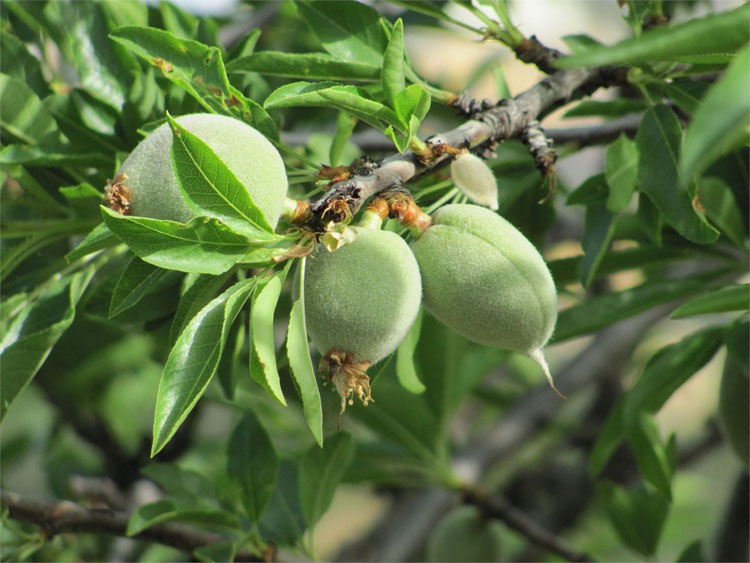 |
| Almond branch from Susan Miura blogspot |
My fantasy house is a low-slung horizontal structure sitting under lush trees on a mediterranean island. The rooms are airy and light with no glass in the windows, only shutters that close against inclement weather (needless to say, there are no prowling would-be intruders). The floors are hand-hewn marble, not hard machine-planed surfaces. There are no sharp angles; the walls softly slide into and out of the corners where they meet. The furniture is minimal: huge floppy neutral coloured cushions on Moroccan type low seats that form part of the walls. No sharp angles here either. Some of the cushions are scattered on the floor. There are no interior doors. Futon beds hug the marble floors and there are screen walls for privacy. The only colour comes from huge ceramic vases filled with wild flowers. The mood is alpha, a sea breeze cools the air.
What else? Here one walks barefoot in soft cotton garments, aware of the eternal moment. A chunky wooden table with soft edges in the kitchen, elegant utensils, simple bowls. No clutter.

And then there is a cellar. Baroque and rich filled with satins, silk and velvets in vertiginous colours: gold, alizarin, scarlet, magenta, ruby, cobalt, indigo, eau de nil, sienna, bronze, sap green, deep violet, saffron. Light from a stained glass window saturates decorated and encrusted silver objects of beauty, inlaid treasures, thin oriental carpets, paintings, icons, and mandalas. The senses are glutted and assailed, soothed and challenged. There is a narrow silver table covered in perfume bottles with haunting fragrances. Here one wears heavy jewellery, gemstone sandals and layers of fine fabrics. You sink into a soft high bed like an odalisque chained in luxury, sip chartreuse from a heavy glass and dream of Bataille.

How much time would I spend above and how much below? Who knows? But I love the idea of tranqulity and excess separated by nothing more than a staircase.
Sunday, January 15, 2012
The truth about green


The Courtauld Gallery in London invites writers to talk about art. I watched novelist Ali Smith's fabulous 3.52 mins video clip 'The Truth about Green' (her response to Cézanne’s L'Etang des Soeurs à Osny) recommended by a friend, and it made my day. It also reminded me of how overused and flattened out both the word and colour green have become. Applied to everything supposedly politically correct and used to endorse anything that can claim the labels wellness or health, however suspect, enchanting hues like chartreuse, viridian, emerald, lime and beryl are pressed into the service of banal everyday commerce from promoting chewing gum to scrubbing brushes. This is a long way from Smith's reality of feeling shot with the truth about green, akin to 'being mugged by life'......
The truth about green? It's the unwritten signature in the body; red's deep opposite. The body as green incarnate. Ali Smith muses, 'anyone can snap me open, I'll bend like a sapling, my skin will split open and I'll see the red insides of me astonished into green...'


My Rasta friends would say: 'Green. Respect.' For the record: I've shed involuntary tears over a red and green Richard Diebenkorn colour field. Enjoy Ali Smith!


Tuesday, January 10, 2012
Hennie Stroebel’s turquoise Levant – art sans frontières
Ceramist Hendrik Stroebel grew up in a young country and yearned for antiquity. So when travel restrictions in South Africa were lifted, he headed for the Levant in pursuit of ancient ruins and relics imbued with the present, and for places like Samarkand and Ardebil whose names lie like jewels in the mouth. The embroidered recollections of this personal odyssey synthesise the Apollononian and the Dyonisian; here are the responses of both Narcissus the priest-monk and Goldmund the wanderer and artist. Austere temples, towers and statues compete with lush fruit, sensual flowers, veiled women and strong men. Ethereal turquoises juxtapose visceral reds.
 |
| Silhouette with Tiles, 2007 |
 |
| Detail, Between the Euphrates and the Tigris, 1999 |
Russell Hoban says if you put certain words together, how the thunder rolls. One can say the same for Stroebel’s seductive choices of images, fusion of craft and art (the materiality of the wooden and ceramic frames are a great counterpoint for the delicate embroideries), and fine blend of colours. I have loved Stroebel’s embroidery for more than a decade so this is not a review of his recent exhibition in Durban which spanned 17 years of work, but a tribute to his patience, keen observations, and exquisite rendering of detail, place and (bygone) time. A tribute to this ‘paint on a string applied with a needle’, as he calls it....
 |
| Silybum Marianum (Milk Thistle) Turkey, 2011 |
What is it that draws Stroebel to Biblical cities, the crossroads of Egyptian, Greek, Ottoman, Byzantine and Roman empires, the silk roads of Uzbekistan and beyond? He loves the largeness, he says, which takes your breath away, and the fact that what is left over in the ruins is still enough; the unembellished restraint in statues washed clean by time, the purity of stripped essences. He reveres both the complexity and simplicity of these cultures so different from our own and yet so close in space and time. And then there is the ‘godly colour’ turquoise which in Islam symbolises the union between heaven and earth. Stroebel uses it with incandescent effect as in my personal favourite, The Remains of Tamerlane.
 |
| Remains of Tamerlane, 2001- 2002 |
Camel Pot, Esfahan, intimate in scale, invokes the monumentality Stroebel responds to, as well as that of his own ceramic pots. This monumental/intimate play ranges over many pieces: from arches to niches, from marble pillars to thistles and buzzing bees.
 |
| Camel Pot, Esfahan, 2009 |
And now a number of significant pieces (Remains of Tamerlane is one of them) are migrating back to the Persian Gulf as part of a private art collection; back to be reabsorbed in the culture that inspired them. And here at home a detail printed on the inside of the catalogue cover has inspired a number of Zulu women to imitate the design in beadwork. The turquoise dialogue continues....


What next? Stroebel wants to go and see the glazed turquoise lions in Babylon of course. And travel though Iraq, if possible.
_____________________________________________________________________
*Also read Marily Martin’s excellent essay, Hendrik Stroebel – Recollect, in the exhibition catalogue.
Wednesday, December 21, 2011
Blue, colour of the imagination
Blue is a mysterious colour, hue of illness and nobility, the rarest colour in nature.It is the colour of ambiguous depth, of the heavens and of the abyss at once… of the blue movie…of anode plates, royalty at Rome, smoke, distant hills, Georgian silver, thin milk and hardened steel – Matthias Ostermann, The New Maiolica
Blue is tout court, the colour of imagination – James Hillman
 |
| Yes Klein Monochrome |
Do you think about blue? We are awash in it: the skies above us, the seas beneath us, which has everything to do with light of course, but it’s paradoxically rare in nature - which may account for its lack of lexical attribution in many languages. Cultivating blue roses and tulips is a horticultural grail which promises fame and reward.
Blue marks merit and distinction: cordon bleu, blue chip, blue blood. Blue diamonds are very valuable and lapis lazuli was once prized above diamonds. The old masters used ultramarine to paint the robes of revered subjects like the Madonna and Christ and the more saturated the colour, the greater its symbolical and actual value since ultramarine was made from ground lapis lazuli.
Few artists tackle blue. Picasso, Chagall, Anish Kapoor but most notably Yves Klein have all used it with striking effect. For Kapoor "…blue reinforces a sense of freedom… The immense inspires us all. Eyes wide open if you like." And then there’s the dizzying breathtaking must-be-experienced saturation of International Klein blue (ultramarine pigment suspended in resin): "From a phenomenological point of view your eyes can't quite focus on blue." For Klein monochrome painting was also an "open window to freedom," and blue held the power to reveal the indefinable, the unknown. His famous symbolic gesture of signing the sky maybe says it all.
Mystics hold that seeing a tiny blue light in meditation is to experience the goal of human life. The throat chakra, symbolising communication, is blue, and the third eye chakra referred to as the gate which leads to higher consciousness, is indigo. The medicine Buddha is translucent blue and certain Hindu gods have blue skins.
In short, the Smurfs are in good company... and if you're feeling blue, there is nothing like a shot of Yves Klein (even on your computer screen) to notch you up!
For a compelling academic essay on blue, also referencing her own work, see Virginia Mackenny’s Blue – a shifting horizon (posted with permission) below.
 |
| Void - Anish Kapoor |

ADDENDUM 30.12.2011:
Male blue-eyed satin bower birds decorate the inside of their nests with blue bits: feathers, candy wrappers, flowers, glass fragments, bus tickets, ribbons, bottle tops - to attract females who respond to blue.
 |
Photo: R. Major © Australian Museum
|
PS A must view: Ali Smith - 'The truth about Green'
Tuesday, December 20, 2011
Subscribe to:
Posts (Atom)